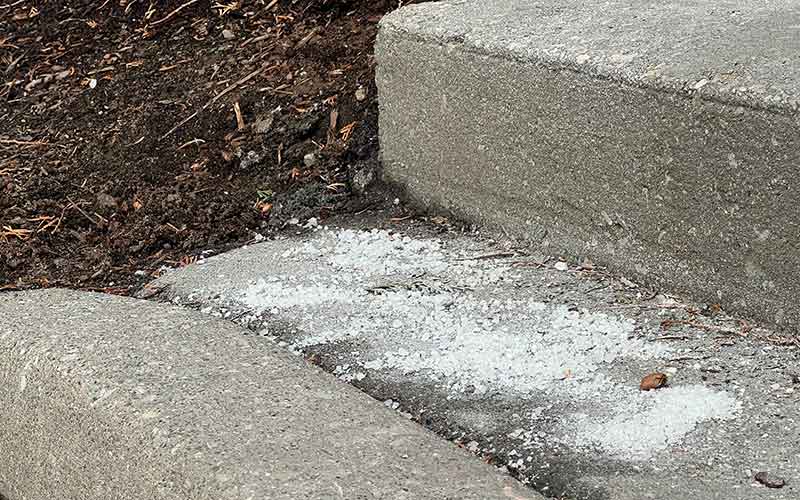
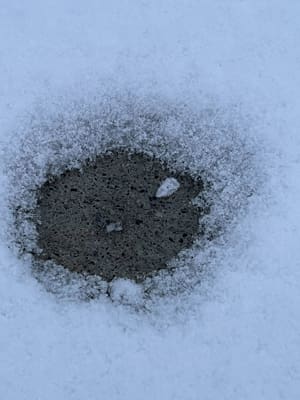
Excessive salt causes cracking and flaking of concrete, destroying steps, sidewalks, and foundations. Photo: Julie Silverman
If you’ve ever struggled across a slick, icy sidewalk, you probably appreciate the importance of de-icing road salt. But have you ever thought about where all those big crystals crunching underfoot wind up? Unfortunately, the answer is probably your nearest body of water.
Keeping our winter roads, parking lots, and sidewalks safe is important, but “we can balance keeping people safe on the roads and sidewalks by using less salt and salt alternatives,” according to Jared Carpenter, an advocate with Lake Champlain Committee. A bill currently in front of the Vermont state legislature would achieve just that.
The Unseen Impact of Salt
Once you spread salt on the ground, it doesn’t go away. Unfortunately, after all that snow and ice melts, the runoff often carries the salt into groundwater, the nearest storm drain, or even directly into a body of water. Once the salt dissolves into the water, there’s no good way to get it out.
That makes rivers and lakes increasingly salty, especially in urban areas, with terrible implications for both the environment and those who rely on it. Salt also harms plants and animals, weakens infrastructure like bridges and roads, and alters the soil.
The negative impacts of increased salinity ripple throughout a freshwater web of life. Saltwater runoff settles on the bottom of lakes, stopping the water from properly circulating oxygen and nutrients, and killing fish. Road salt can kill off zooplankton, the little critters that feed on phytoplankton. Phytoplankton (microalgae) can form oversized blooms that block sunlight to deeper waters, causing even more problems. Road salt also kills plants along roadways and changes the soil’s microbe communities, reduces soil’s ability to hold and soak up water, and releases toxic metals held in the soil.
Salt also corrodes infrastructure over time. It damages paved surfaces, including roads, sidewalks, and bridges. Over-application of road salt has even worn away Vermont’s state house steps. “It gets into the sidewalk and starts cracking pavement,” points out Carpenter.
When salt corrodes pipes, it can release lead and other dangerous heavy metals, contaminating our drinking water. Dissolved salt infiltrates groundwater and winds up in wells, reservoirs, and other sources of drinking water. Road salt is made of sodium chloride – the same stuff on your dining room table, just in bigger granules. Imagine grabbing the saltshaker and dumping it into your water glass. It’s unpleasant for everyone, but for people who are on low-salt diets or managing high blood pressure, the uptick in salinity can actually undermine their health.
Some animals, like moose and deer, also like to lick up salt from paved surfaces. This can harm the animals’ health, or worse, lure them onto roads and cause dangerous car accidents. Salt can also sicken pets and hurt their paws.

“The amount of road salt use has been steadily increasing as we pave more roads, sidewalks and parking lots. At the same time climate change has created more frequent freeze-thaw cycles, causing icier conditions and more salt running off our roads, polluting our lakes and ponds – including Vermont’s Lake Champlain.
Growing up in Vermont, the only folks that wore spikes or crampons on their boots were serious ice climbers and mountaineers. Now everyone and their grandmother can’t leave the house for a walk around the block without some sort of tractions spikes on their shoes to stay upright on the icy sidewalks.”
–Julie Silverman, Lake Champlain Lakekeeper
Getting Unnecessary Road Salt Off the Streets
It may be unrealistic to stop using road salt completely, but there are common-sense steps we can take to scale back its overuse. The Chloride Contamination Reduction bill, currently in front of the Vermont legislature, would create a voluntary education program for cities, towns, and de-icing companies to help them use salt more responsibly and sparingly.
The program would encourage salt applicators to embrace alternatives, like more effective plowing, better blades to scrape snow off, and the use of brine solutions or sand instead of salt. It would also encourage best practices, like using the minimum necessary amount of salt and not applying it in temps under 15 degrees, when it isn’t effective. The program wouldn’t stop anyone from clearing our streets, but it would help them do so as safely as possible.
A Less Salty Future for Vermonters
“In Vermont, we’re looking to catch up with neighbors in New York and New Hampshire,” says Carpenter. Similar programs in those states have shown that we can decrease our salt usage without compromising safety. Simple adjustments in our salting practices can protect our waterways, wildlife, and drinking water, while keeping our paths clear. This bill is an obvious win for Vermonters and our environment.
Be a Smart Salter
It only takes one teaspoon of salt to pollute five gallons of water. Here’s how you can help reduce your salt use to protect our water.
- Shovel: Clear snow from sidewalks and driveways before it turns to ice. The more snow you remove, the less salt you will need, and the more effective it will be.
- Scatter: If you use salt, scatter it so there is about three inches of space between the grains. A coffee mug of salt is enough to treat an entire 20-foot driveway!
- Sweep: Once the salt has done its job, sweep the extra so you can reuse it for another storm.
- Switch: Salt doesn’t work when the pavement temperature is below 15 degrees Fahrenheit or colder. Switch to sand or use a different deicer that works at lower temperatures.