
Across New England, many of us are familiar with the sinking feeling that comes with opening a utility bill. Whether it’s three figures or four, it’s always more than we expect, and often more than we can afford, especially during the winter. What’s more, prices seem to go in only one direction: up. In fact, New England residents pay some of the highest utility bills in the country, with no end in sight.
What accounts for our sky-high energy bills? And is there anything we can do about it?
The answer may surprise New Englanders, who are bombarded by polished ads touting natural gas as a cheap and abundant resource that will lower our energy bills. According to that industry-led narrative, it’s clean energy and energy efficiency programs that are driving up costs. But here’s the dirty truth: Our utility bills are higher because we rely so much on natural gas, and utilities profit from that reliance.
“Natural gas is highly susceptible to market volatility and supply issues,” explains Greg Cunningham, vice president for CLF’s Clean Energy and Climate Change program. “It’s sensitive to geopolitical events and bad weather. And when gas prices go up, it affects not just gas heating but also electricity rates. That’s because natural gas-fired power plants compete with homeowners on the coldest winter days, which also drives electricity prices up. That cost gets passed on to you.”
As we head into winter, the cold, hard truth is that our energy bills are destined to spiral higher. And the situation is being made worse by the policies of the Trump administration, which is halting some of the most economical and promising energy options we have – in particular, relatively cheap and clean offshore wind and solar power. Less wind and solar power means we will rely more heavily on gas power plants, which increases costs and puts us at risk of brownouts or worse, blackouts. The administration is using a gas supply crisis of its own making to peddle costly new gas pipeline expansions to be paid for by utility customers – trying to force us to pay for pipelines we don’t need, storage tanks we don’t want, and the ongoing expense of maintaining and repairing aging, leaking pipes and compressor stations. It’s a pricey proposition, and that’s before the environmental costs are factored in.
“It’s madness, and a form of market manipulation to favor oil and gas that’s counter to our state policies and consumer preferences,”
says Greg Cunningham, CLF’s VP of Climate Change and Clean Energy
“It’s madness, and a form of market manipulation to favor oil and gas that’s counter to our state policies and consumer preferences,” says Cunningham. “If we hope to get a handle on our utility bills, it’s essential that we build out onshore and offshore wind infrastructure. Combined with solar, there’s no question that these renewable options are much cheaper alternatives to oil and gas.”
CLF has long pushed forward the responsible siting of offshore wind projects in New England and celebrated when the Vineyard Wind project generated its first power from its offshore base and sent it to homes earlier this year. And we have championed solar power for even longer. Unfortunately, the Trump administration has obstinately set down a fool’s path leading in the exact opposite direction. It attempted to halt construction on Revolution Wind, an almost-completed project, before a federal court intervened to lift the Trump order. It canceled permits on wind projects in Massachusetts and Rhode Island. It also canceled the Solar for All program designed to boost solar adoption in low-income communities throughout the region. These actions are discouraging clean energy investors and developers. That, in turn, drives up costs and slows, or worse, halts deployment, making us more reliant on the real cost culprit – gas.
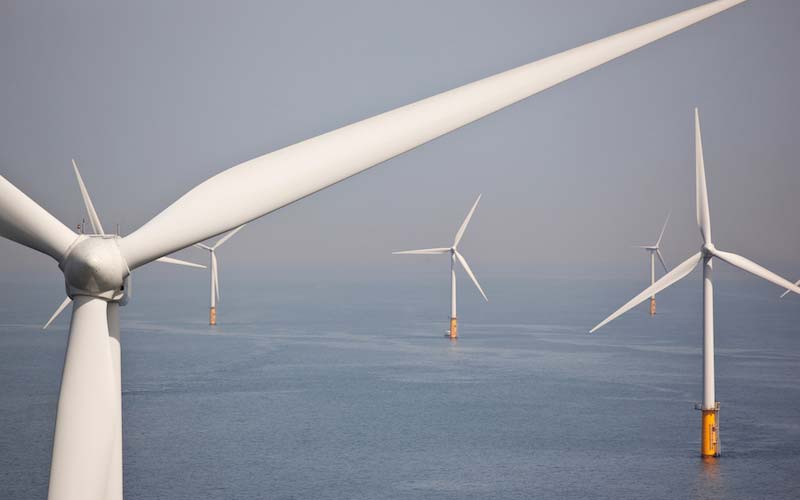
Meanwhile, the administration is working overtime to tilt the playing field back toward fossil fuels, including declaring an energy emergency as one of Trump’s first executive actions. It is weakening environmental review standards, prioritizing fossil fuel infrastructure, and is overtly hostile toward renewable projects. The result? Most of us will remain tethered to volatile natural gas markets. The administration has effectively doubled down on the very reason for our high bills – fossil fuels – while blocking the long-term solutions that could bring those costs under control.
The Misinformation Narrative
While this dynamic is hidden for most households, what is front and center are the line items laid out in the typical electric bill. These include a “customer charge,” “distribution charge,” “transition charge,” and “transmission charge.” Among them are charges for “distributed solar,” “renewable energy,” and “energy efficiency.” Though they represent a small percentage of the overall charges, at first glance they may seem to needlessly pad your electric bill.
“When people see those items, it’s natural for them to think that it’s the energy efficiency and renewable energy programs that are driving up costs,” says Cunningham. In truth, it is the exact opposite, although fossil fuel interests haven’t hesitated to mislead customers into believing that these programs are raising energy prices.
But Cunningham explains that it’s a distraction tactic.
“Utilities point fingers at small efficiency programs while avoiding accountability for the real drivers of costs,” he says.
In fact, energy efficiency programs result in significant savings. An analysis conducted by Lawrence Berkeley National Laboratory in 2021 revealed that, over eight consecutive years of efficiency program data, electricity efficiency programs were a low-cost way for utilities to meet their energy and peak demand needs, thereby keeping costs lower for customers.
The reason is simple: energy efficiency measures reduce the amount of energy we use. When we ease the overall demand for electricity through efficiency, prices respond by going down. And studies show that for every $1 invested, households and businesses receive $3.40 in benefits. There’s less of a burden on the system, and less of a burden on our wallets.
What’s Really Behind High and Volatile Energy Bills
A fundamental economic principle is that when there’s no competition in a field or industry, prices tend to go up. So it should come as no surprise that in the U.S., where natural gas-fired power plants generate 43% of all electricity and where natural gas is the largest single source of electricity, we’d be hamstrung.
Natural gas-fired power plants, which produce the majority of our electricity, do not have their own supply of gas. Instead, they purchase leftover gas that is not used by gas utilities. In the summer, when we are not heating our homes, gas utilities have plentiful supplies that the power plants can purchase at a lower price. In the winter, and especially on our coldest days when furnaces are cranking region-wide, the excess supply is much lower, and the prices are much higher.
It’s not only summer heat waves and polar vortexes, but geopolitical events, that make this natural gas market volatile. One example is how gas markets reacted after Russia invaded Ukraine in 2022.
Additionally, the utility business model relies on maintaining and expanding gas pipelines. However, that’s an expensive undertaking that results in aging and eventually obsolete infrastructure that can no longer transport gas, yet customers still have to pay for. (That proved a key point in CLF’s successful fight to stop the proposed massive Kinder Morgan pipeline from 2013 to 2016 – and the economics haven’t changed since.)

Factoring in gas volatility and its expensive extraction, paired with the difficulty of storage, transport, and maintenance, it’s easy to see where our money is going. Add in the simple compelling notion that limiting our energy options to one polluting energy source is not the wisest idea, and it’s all too evident where all this could be headed.
Clean Energy and Efficiency Are the Solutions
So, what is the way out of this expensive energy bill trap?
“Clean energy and efficiency are the solution,” says Cunningham.
Scientific American reported last June that even without subsidies, renewable energy can compete with fossil fuels when it comes to building new power plants. Globally, according to the International Renewable Energy Agency, new solar power was 41% cheaper and new onshore wind power was 53% cheaper than the lowest-cost fossil fuels.
Energy efficiency programs that incentivize efficient home appliances, weatherization, and electric heat pumps can lower bills for everyone, including those who do not take advantage of incentives, by reducing strain on the grid and avoiding expensive infrastructure upgrades, while also lowering peak demand.
Heat pumps, for example, can save users as much as 40% to 50% annually compared to oil/propane heating. That’s why CLF supports initiatives like Massachusetts’ new special discounted winter electricity rate for homeowners who want to make the switch away from oil or gas boilers to efficient and cleaner electric heat pumps. In Maine, CLF has supported Efficiency Maine Trust in its development of a program that provides financial incentives for heat pump installations, along with technical help, and links to contractors who can install them. By 2023, under the program, more than 100,000 heat pumps had been installed across the state – two years ahead of the targeted goal. A typical Maine home heated entirely with heat pumps will save, on average, more than $600 per year on its heating bill, according to the Trust.
As more New Englanders install heat pumps, weatherize, and swap energy-efficient appliances for energy hogs, it will reduce demand. And if that is combined with power generated from cheap, reliable sources like solar and wind, the result could be not only lower utility bills, but tens of thousands of local jobs.
“The bottom line is that expanding, not cutting, clean energy and efficiency is the path to lower bills,” says Cunningham.
What the Future Could Hold
There’s no sugar-coating the truth. At this moment, the federal government has backtracked on clean energy and its responsibility to combat climate change. There will be no climbing out of our climate woes, or even just lowering our energy bills, without bold action. That’s why states need to step up.
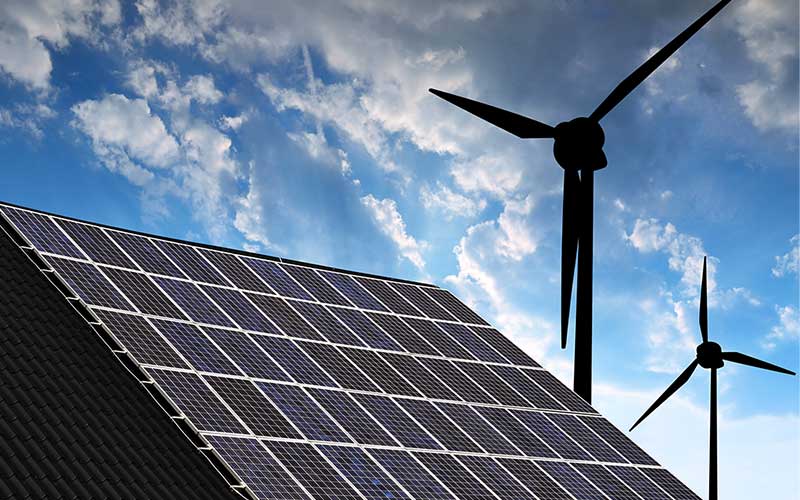
Cunningham says states can begin by streamlining permitting for solar and onshore wind projects – changes that CLF is pushing for across New England. We are also urging state leaders to modernize rules for how energy infrastructure is sited to enable community and utility-scale solar projects to move forward more efficiently. States can also proactively plan transmission lines to accommodate offshore wind and solar power while expanding energy efficiency incentives to lock in near-term savings. States like Massachusetts and Maine have already shown leadership on affordability programs and that same urgency must be applied to clean energy deployment.
Our utility bills are high, and they may get even higher. But let there be no confusion about the actual cause. The real culprits are natural gas volatility and utilities’ fossil fuel lock-in. The real solutions are efficiency and renewable energy. Policymakers and regulators must protect families by doubling down on clean energy and efficiency, not rolling them back.