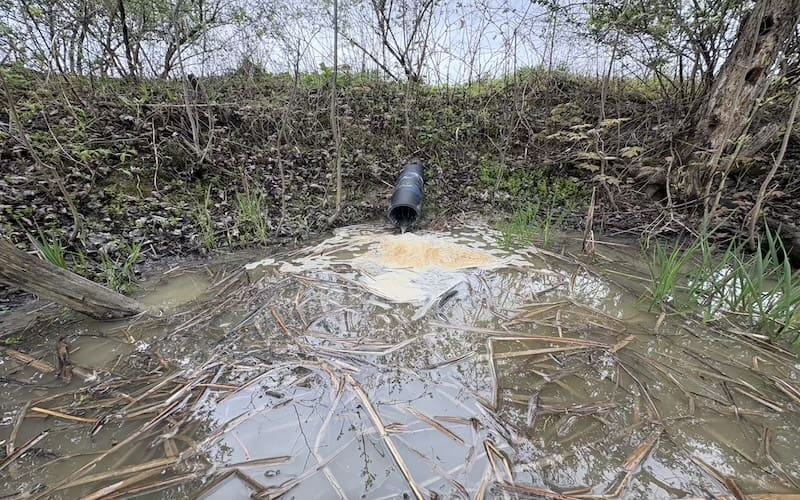
An outfall from the Vorsteveld operation in Panton, VT. Photo: CLF
December 16, 2025 (Montpelier, VT) – Conservation Law Foundation (CLF) and Vermont Natural Resources Council (VNRC) have filed a lawsuit against Vorsteveld, LLP, a large Concentrated Animal Feeding Operation (CAFO) in Panton, Vermont, for ongoing violations of the Clean Water Act. Numerous pipes on the Vorsteveld operation pour pesticides directly into tributaries feeding Lake Champlain without a permit. Some of these toxic chemicals are found to be at levels that far exceed state and federal safety standards, including by as much as fifty times higher.
“Vorsteveld, LLP’s ongoing pollution is unlawful and puts our communities and waterways at risk,” said Elena Mihaly, CLF’s Vice President for Vermont. “Clean water is essential to our families, our farms, and our future. Vermont’s farmers take pride in being good stewards of the land, and they know that dumping toxic pesticides into streams where we fish, boat, and draw drinking water is not the Vermont way. Vorsteveld must stop this harmful pollution now.”
CLF and VNRC notified Vorsteveld in October of their intent to sue. Despite the warning, the unlawful discharges have continued, forcing the filing of the lawsuit.
Lauren Hierl, Executive Director of VNRC added, “All Vermonters deserve clean and safe water, and we all have a part to play in stewarding the health of our landscape and communities. No polluter should be allowed to discharge pesticides and other harmful pollution at these excessively high levels.”
Under the federal Clean Water Act, Vorsteveld is barred from dumping any pollutants into Vermont’s waterways without a permit. The suit seeks action requiring Vorsteveld to take responsibility for its toxic pesticide discharges by securing a legally required federal pollution control permit and taking steps to stop its pollution.
The notice details dangerous levels of multiple pollutants coming from the site, including atrazine, metolachlor, and clothianidin. Out of 92 water samples collected from the Vorsteveld pipes over two years, 99% contained clothianidin at concentrations exceeding the EPA’s safety benchmark. Atrazine, a highly toxic herbicide that was banned in Europe in 2004, was documented at fifty times higher than what the EPA considers safe for drinking water. Atrazine is a hormone-disrupting pesticide that is linked to birth defects, cancers, and other health risks.
The full lawsuit can be read here.
Experts are available for further comment.
###