
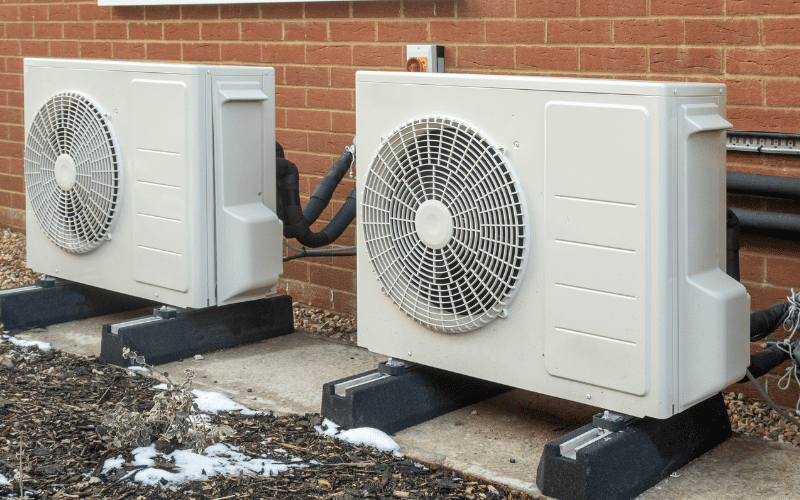
Heat pumps like the one above are a great way to keep us cozy, keep us cool, and build a cleaner, more affordable future for New England. Photo: Canva.
If you’re from New England, then you know how cold our winters can get, and with temperatures going over 90 degrees, summers are also heating up. Climate change means we’re experiencing the worst of both seasons. With rising temperatures comes rising bills – and we’re all looking for ways to cut costs as energy prices soar.
Currently, many New England families and businesses use fossil fuels to keep warm in the winter and a separate air conditioning system to keep cool in the summer.
What if I told you there’s a cleaner, cheaper, more efficient solution that works year-round? Would you believe me? Well, buckle up. There is: the electric heat pump.
Heat Pumps Work in the Winter and Summer
A heat pump is an all-in-one system that transfers hot or cold air from one place to another, rather than generating it like a traditional furnace or air conditioner. In the winter, it pulls heat from the outside atmosphere (even when it’s cold!) and brings it indoors. It does the opposite in the summer, pulling heat from inside and releasing it outside.
Yes – Heat Pumps Work in Cold Climates
One of the most common misconceptions about heat pumps is that they don’t work in low or below-freezing temperatures. That’s not true. There are systems designed specifically for cold climates like New England’s. In fact, the US Department of Energy tested cold-weather heat pumps in 2021 and found that they worked even in temperatures as low as minus 15 degrees.
Cutting Bills and Pollution with Heat Pumps
This heating and cooling technology is extremely energy efficient, meaning it uses less energy to warm or cool your home than traditional fossil-fuel-powered systems that generate heat. Heat pumps are three to five times more efficient, and they don’t take as much energy to keep your home comfortable and cool. Sofia Quaglia compares the two in the New York Times: for every unit of electricity, a heat pump gives you about three times more heat compared to a gas boiler.
While it’s true that most of New England’s electricity still comes from gas-fired power plants at the moment, this will change as more renewable sources, like solar and wind, come online. Until then, heat pumps still make a difference by using less energy – cutting bills regardless.
Not to mention, the less fossil fuels we use, the better. Not only are gas, oil, propane, and coal notoriously price-volatile, but they also release toxic pollution when burned. This pollution chokes our air and overheats the planet – damaging our health and the environment. We don’t need to look far to see the impacts: shorter, less snowy winter seasons, unnatural disasters like flood-inducing rainfall or tornadoes we never used to see, a boom in pests like ticks, and so much more. These changes didn’t happen overnight. They’re a result of burning outdated fossil fuels. Upgrading to heat pumps can help slow these impacts, protecting the New England we know and love.
Pump Up the Savings While Staying Cozy
Heat pumps are today’s cleaner, cheaper option for heating and cooling New England homes and businesses. It’s an option that doesn’t force us to rely on a fossil fuel system that is rapidly overheating our planet and draining our wallets. We need our decision-makers to ensure that everyone can access and afford this efficient technology, no matter where they live or how much they earn.
CLF has been pushing for policies, laws, and programs that achieve this goal. For example, many state energy efficiency programs offer incentives to transition to electric heat pump systems, such as financial rebates and discounts. Additionally, Massachusetts has implemented a special, lower electricity rate for heat pump owners (and other New England states have been considering following suit).
All of us deserve a way to stay comfortable in our homes without breaking the bank or overheating the planet.
So, whether we’re bracing for winter or summer, remember that we can use heat pumps to keep us cozy, keep us cool, and build a cleaner, more affordable future for New England.