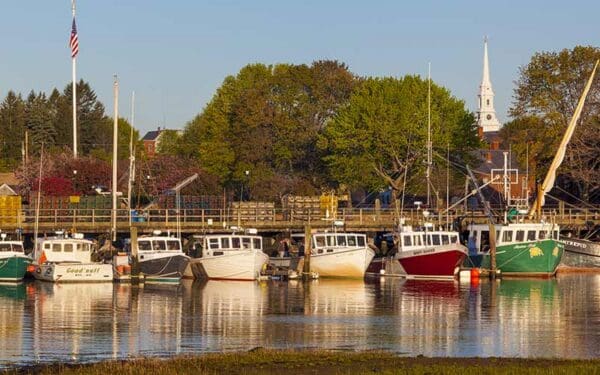

Ken Sparta, of Spartan Sea Farms has been raising kelp sustainably in Maine since 2019. Photo: Courtesy Ken Sparta
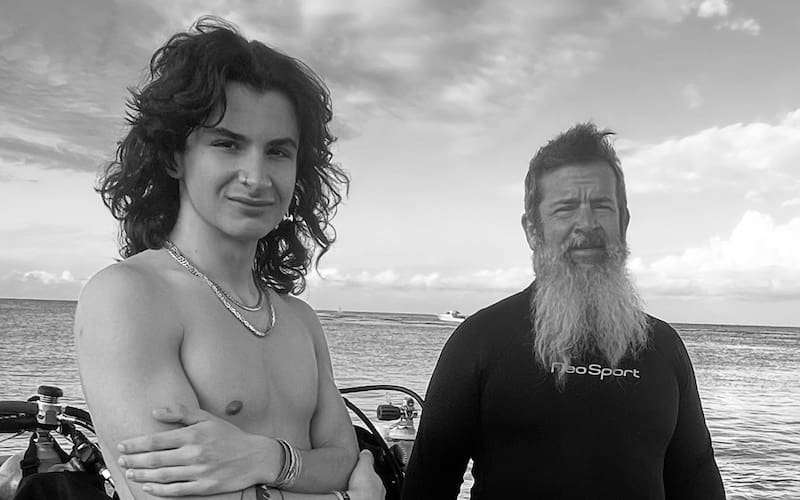
Since 2019, Ken Sparta and his son Leo have quite literally leapt into the world of oyster and kelp farming, where they now regularly pull oysters and kelp from the coastal waters near Freeport, Maine. In fact, in 2024, Spartan Sea Farms hauled 100,000 pounds of kelp out of the water. Both oysters and kelp keep ocean water clean by absorbing excess nitrogen and carbon dioxide. When planted together, they work in tandem, since both have complementary growing seasons, potentially providing year-round filtering benefits.
Sparta says he is committed not only to improving the environment but also to providing opportunities for Maine families. He would love to see similar businesses make a splash in other parts of the country. Recently, he visited our Boston office to describe his work and passion. Below, we’ve excerpted portions of his talk. His remarks were edited for length and clarity.
On how he got his start…
In 2018, I dove on a guy’s oyster farm. He needed me to check some stuff and shoot some video. I saw how fast the oysters were filtering the water. I went from visibility of 6 to 12 inches to the visibility that we have in this room. Each oyster filters 50 gallons of water per day. He had a million oysters on his farm. That’s a lot of gallons, right? It really is pretty amazing.
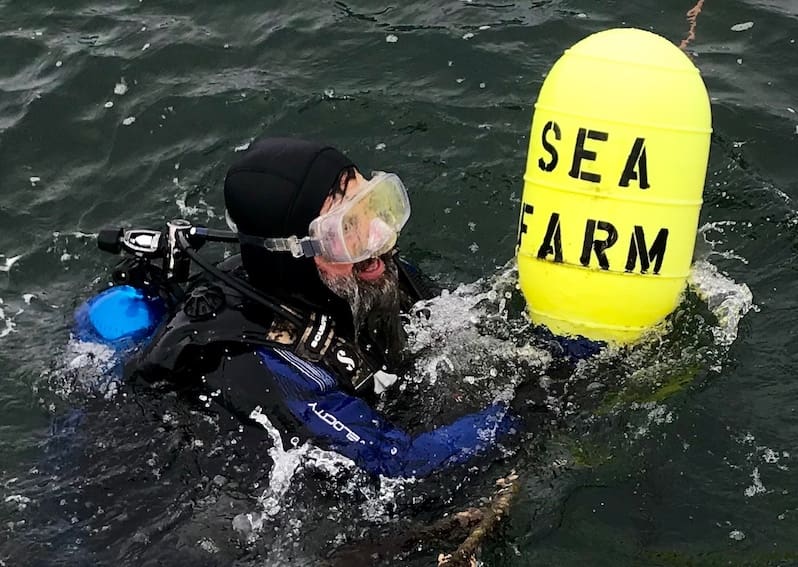
I took a class in aquaculture in 2018. I made my business plan and realized, wow, oysters don’t pay me anything for three years. I was smart enough to realize that wasn’t a great formula! So, I started looking at kelp. And the kelp you plant in November, you harvest in May. So at least you get income every year. I started learning more about kelp, decided to put it in.
On how he handled the pandemic…
We sold kelp direct to consumers in 2020 and started getting oysters in 2021. If you remember back then, restaurants were kind of spotty, but brew pubs were going crazy. So, I bought a couple of hot dog carts and opened up ‘Shuck’ wagons. And we’d bring them to the brew pubs and shuck [oysters] out in front. It was funny because my son couldn’t drive yet. I would drive him, drop him off with a hot dog cart at one brew pub. I’d go to another brew pub, and I’d pick him back up on the way home. We did farmers’ markets, and then some direct restaurant stuff.
We also started the Maine Family Sea Farm Cooperative in 2021. And then opened up Freeport Oyster Bar in 2022. And then my first food product, which was a spicy kelp relish, came out in 2023. In 2023, I had 20,000 pounds of kelp come out of the water. In 2024, I had 100,000 pounds come out. And so, we have expanded kelp quite a bit. Oysters have flatlined because they’re a little bit more boring.
What motivates him most…
We’ve developed this company, and it’s important to us, obviously, to have fun. It’s important for us to be safe, have fun, and pay a reasonable living wage. And the best thing about our company is it’s incredibly important to me that we’re always thinking about being environmentally positive.
We’re in the process now of changing our nursery over to solar power. We’re not quite there yet with an electric boat, but electric boats are starting to come into the market in our industry. I’m pretty excited about that.
And instead of marketing our products, we fundraise for local nonprofits. My feeling is that by doing that, we get as much out of our marketing dollars, and we help our local community.
On growing kelp…

We have to grow kelp seed. We start with source tissue, reproductive tissue, and we collect that in the wild. This year we used gametophytes from a gametophyte bank [a collection of both male and female plant sperm and eggs]. (Thank you, GreenWave!) We drop those into the tanks, and then this gives us an opportunity to control the conditions this stuff grows in. We wind upholstery twine around spools. There are 24 spools to a tank, and over 400 feet per spool. So, we’re up around 10,000 feet [of kelp seed line]. Each foot of kelp seed line can produce up to 12 pounds of kelp. So that’s a lot of kelp, right?
Each day the spools get flipped. They get turned, they get fed, the tanks get drained down, and we add more water to them. The water goes through a pretty extreme filtering process both on the way in and out of the nursery. So, we take the water out of the Cousins River, we put it through a protein skimmer and an ozonator, UVA/UVB light, and then, through mechanical filtering, it goes in with our kelp. Then it comes back out through UVB and mechanical filtering before it goes back to the river. It’s by far the cleanest water in Casco Bay by the time it goes back in.
Life in the kelp nursery…
Depending on where we are in the nursery season, we keep [the nursery room] at about 45 degrees.
It’s a chilly work day or a warm work day, depending on the season. We’ll be in there for six to eight weeks after we start the seed. We’ll end up with 10 to 12 weeks of kelp seed production. And then we plant them out on the farms.
It’s pretty crazy to go from just a brown film on that string to that beautiful plant. And it’s hilarious as you’re harvesting. If you look around, everybody’s got it in their mouth. It’s just so, so yummy.

On the climate…
All that kelp that starts in that little [nursery room] will pull thousands and thousands of pounds of carbon and thousands and thousands of pounds of nitrogen out of Casco Bay. Every oyster that an oysterman puts in is filtering ridiculous amounts – 50 gallons – of water in a single day.
More importantly, if you think about the cost of putting a pound of beef onto somebody’s table or even a pound of chicken or pork, versus putting these products on someone’s table, the cost to the environment is extreme with that beef, right? Crazy amounts of stuff getting pumped into the ground as opposed to the oceans being cleaned up.
There needs to be a turning point at some point. Maine is in way better shape than other parts of the country. California has had only one seaweed farm approved in the past 30 to 40 years. Oregon has had none. Washington state has had a few, and it’s tragic because they have cold waters on the Pacific Coast all the way down to San Diego.
For the most part, all of our [kelp] farming happens between Long Island Sound and Maine. My farm produces more kelp than Massachusetts, Rhode Island, Connecticut, [and] New York. So, you know, most of it happens in Maine or Alaska. And there’s not a good reason for that.

On the future of regenerative aquaculture…
We’re out there, and I mean, sure, we’d all like to make millions of dollars, but in reality, we’re supporting some families, which is fantastic. We’re able to do that, but we should be doing so much more. We’ve [Maine] has got a lobster industry that’s in decline. Our shrimp fleet is done. Our bottom fleet is done. And this is a place where we could be working out in the water and using regenerative practices to improve things.
The takeaway from Spartan Farms
All told, shellfish aquaculture, when combined with kelp aquaculture, may be one of the best solutions we have to address our climate problems. It’s neither complex nor costly, and, best of all, it’s natural. Let’s hope the tide has turned toward aquaculture that enhances coastal ecosystems rather than destroying them. (We’d be happy as clams.)