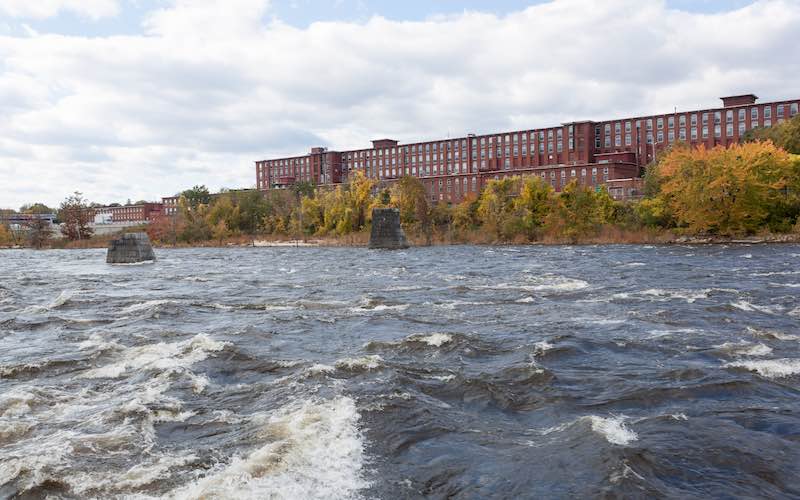
The Manchester Wastewater Treatment Facility discharges PFAS into the Merrimack River, an important ecosystem and source of drinking water for downstream communities. Photo: Creative Commons
December 9, 2025 (Concord, NH) – Conservation Law Foundation (CLF) is appealing the Environmental Protection Agency’s (EPA) issuance of a permit that allows the Manchester Wastewater Treatment Facility to continue discharging toxic PFAS chemicals, also known as “forever chemicals,” into the Merrimack River. The appeal, submitted to the Environmental Appeals Board, argues that EPA failed to comply with the law and its own policies when issuing the final permit.
“Everyone deserves safe, clean water – it’s that simple,” said CLF Associate Attorney Jillian Aicher. “By ignoring clear evidence that PFAS discharges threaten our waterways, our ecosystems, and our health, the EPA is failing in its most basic duty – to protect our communities and our natural resources. It’s essential that EPA step up and fulfill this duty by reducing toxic PFAS pollution.”
The EPA finalized the Clean Water Act permit for the Manchester facility without properly considering whether it should set limits for PFAS under the state’s water quality standards. The agency also failed to follow its environmental justice policy, which is meant to protect communities overburdened by pollution. The city-owned wastewater treatment facility burns sewage sludge, which contains PFAS, and is not designed to remove PFAS from its air emissions. It also discharges PFAS into the Merrimack River, an important ecosystem and source of drinking water for downstream communities.
CLF is asking the Environmental Appeals Board to find EPA violated the law and its policy in granting the final permit and send the permit back to EPA to properly consider PFAS and environmental justice.
PFAS are known as forever chemicals because they do not break down in the environment or in our bodies. These toxic substances are linked to a growing number of health harms, including cancers, fertility issues, child development disorders, hormonal dysfunction, and damage to the thyroid, liver, and kidneys. A recent study has raised concern about elevated cases of kidney cancer in Manchester, based on data from 2013 to 2021, and recommends further study.
PFAS are found in wastewater from industrial users sent to Manchester’s Wastewater Treatment Facility, the largest wastewater treatment plant in northern New England, and the only one in New Hampshire that incinerates its sewage sludge.
This appeal follows CLF’s state-level challenge filed in June with the New Hampshire Water Council.
The appeal can be found here.
CLF experts are available for further comment.
###