Exposing ExxonMobil’s Dangerous Campaign of Deceit and Denial
Exposés by InsideClimate News and the Los Angeles Times have confirmed that oil giant ExxonMobil knew as early as the late 1970s that climate change caused by human activities would be devastating if left unchecked.
But instead of taking action, the corporation lied to the government, and to all of us, by funding an aggressive campaign trying to foment doubt about climate science.
CLF in Action
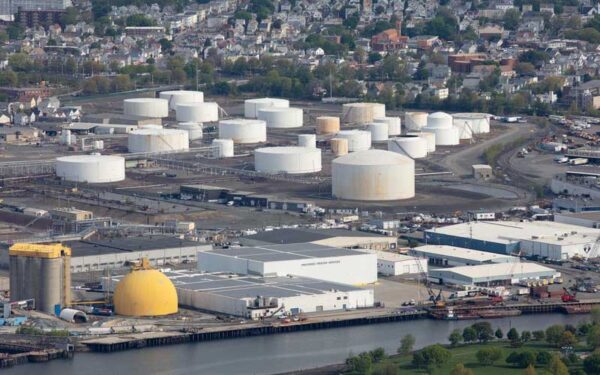
CLF started its own investigation, focused on how this climate deceit has affected New England communities. Our investigation revealed that, despite knowing the harm climate change could cause, ExxonMobil left its oil storage facilities in Everett, Massachusetts, and elsewhere vulnerable to flooding from storms and rising seas.
This failure to act put local communities at risk of catastrophic releases of oil and hazardous substances – events more and more likely given the extreme weather and bigger storms already experienced by New Englanders every year.
To hold ExxonMobil accountable for this inaction, CLF launched the United States’ first legal action against the corporate giant for its climate deceit and for clean water act violations at its oil storage facility in Everett, which sits on the Mystic River.
In 2022, amid pressure from our lawsuit, ExxonMobil ceased operations at its Everett tank farm and sold the site to a developer.
What’s at Stake
A boat trip through the Mystic River Watershed – which spans 76 square miles and 22 communities north of Boston – reveals scenery both beautiful and troubling. A great blue heron gracefully taking flight contrasts sharply with hulking freighters offloading oil and other cargo. It’s the most urbanized watershed in Massachusetts and one of the most polluted.
ExxonMobil’s record as a responsible corporate neighbor to lower Mystic communities was already tarnished before CLF filed its lawsuit. In 2006, 15,000 gallons of diesel oil spilled into the Mystic River from the company’s Everett facility – and the company only realized there was a problem when the Coast Guard came knocking at their door. The spill was blamed on faulty valves and lax oversight – both of which the company were aware. ExxonMobil ultimately agreed to pay $6 million in fines for its criminal violations of the Clean Water Act.
Unfortunately, that lesson didn’t seem to have stuck. ExxonMobil continued to put the Mystic, its neighboring communities – and, by extension, Boston Harbor – at risk of a catastrophic oil spill by failing to fortify this same facility against the impacts of climate change.
Even with the tank farm closed, the Everett site contains contaminated soil and groundwater, and it will remain a serious threat to the community and the environment until Exxon or the purchaser takes responsibility to remediate it. Redevelopment would only be appropriate if it is fully and properly prepared to withstand climate impacts and severe weather, and a massive cleanup is undertaken to fix these serious issues.
CLF will continue to hold ExxonMobil accountable in court for its unlawful conduct and will be involved in the redevelopment process to make sure that community voices are heard.